SUSPENSION ELEMENTARY:
Why Are My Tires Wearing Unevenly?
Have you ever looked at your tires and noticed one edge wearing faster than the other? Maybe the inside edge is bald while the rest of the tread still looks good. Or perhaps the tire feels rough when you run your hand across it.
Uneven tire wear is one of the most common issues truck owners encounters, whether the vehicle is stock, lifted, leveled, or lowered.
Fortunately, your tires can often tell you exactly what’s wrong.
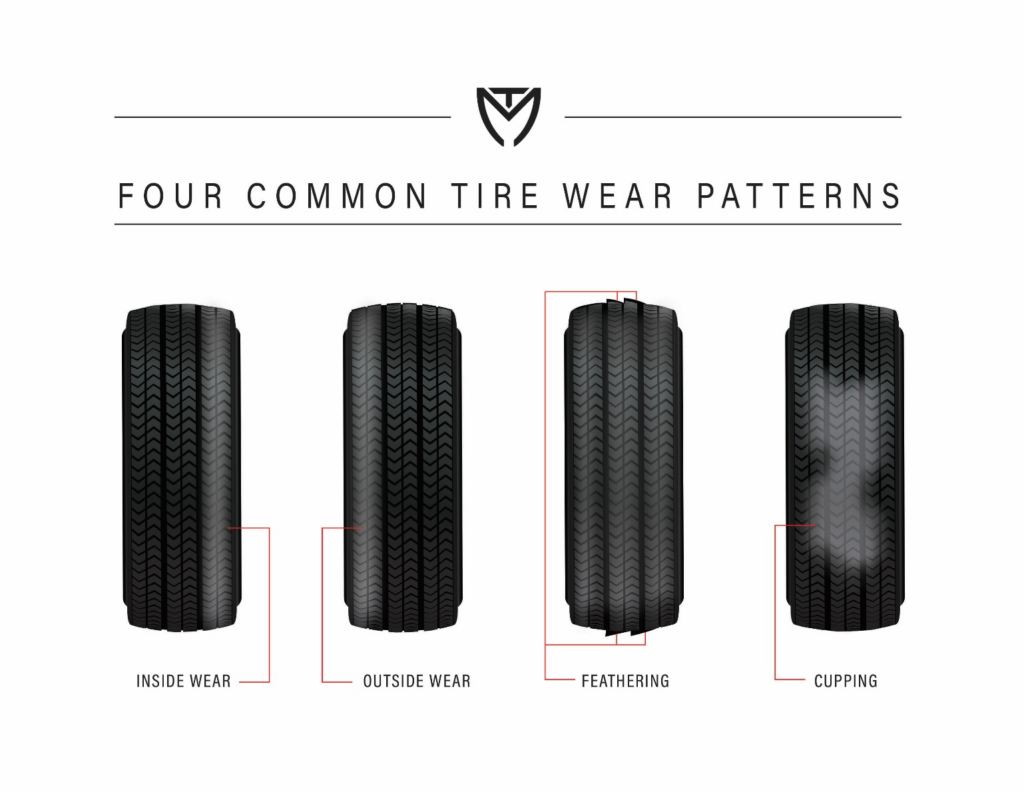
Common Tire Wear Patterns:
Inside Edge Wear
If the inside shoulder of the tire wears faster than the rest of the tread, excessive negative camber is often the cause.
Camber is the inward or outward tilt of the tire when viewed from the front of the vehicle.
Too much negative camber places more load on the inside edge of the tire, causing it to wear prematurely.
Outside Edge Wear
Outside edge wear is typically caused by excessive positive camber.
In this case, the outer shoulder of the tire carries more of the vehicle’s weight than intended, leading to accelerated wear.
Feathering
Does the tire feel smooth in one direction but sharp or rough in the other?
That’s called feathering.
Feathering is usually caused by improper toe alignment. Even small toe changes can significantly reduce tire life.
Cupping
Cupping, sometimes called scalloping, appears as high and low spots around the tire tread.
This type of wear is often associated with worn shocks or struts that allow the tire to bounce rather than maintain consistent contact with the road.
Understanding Camber
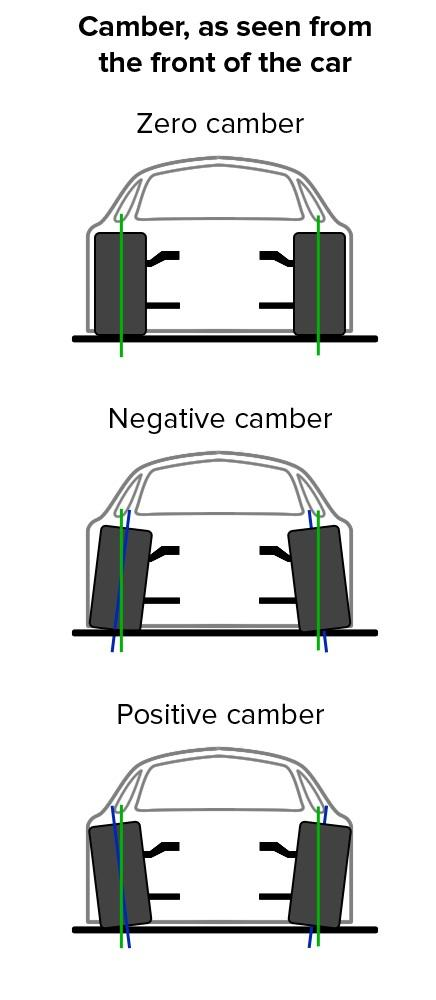
Camber refers to the angle of the tire when viewed from the front of the vehicle.
- Positive camber = top of tire leans outward
- Negative camber = top of tire leans inward
- Zero camber = tire sits nearly straight up and down
When camber moves outside the intended specifications, uneven tire wear often follows.
-

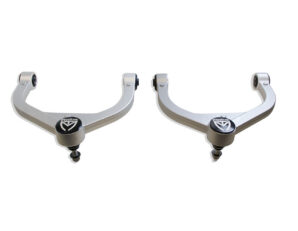
2009-2026 RAM 1500 CAMBER CORRECTION UPPER CONTROL ARMS
Maxtrac 352700
$562.63 -
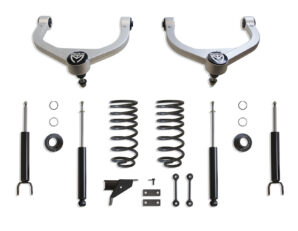
2019-2026 RAM 1500 (6-LUG) 2WD/4WD 2″/4″ LOWERING KIT W/ CAMBER CORRECTION UPPER ARMS
Maxtrac K332724A
$1,235.58 -
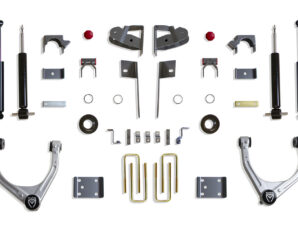
2019-2026 SILVERADO/SIERRA 1500 2WD/4WD 2″/4″ LOWERING KIT (STRUTS) (W/ CAMBER CORRECTION UCA’S)
Maxtrac K331924SA
$1,576.10 -
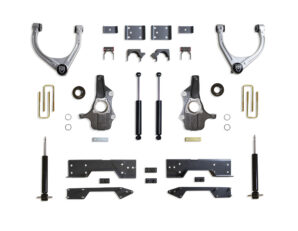
2019-2026 SILVERADO/SIERRA 1500 2WD/4WD 4″/6″ LOWERING KIT W/ C-NOTCH (W/ CAMBER CORRECTION UCA’S)
Maxtrac KS331946SA
$2,204.47
How Lift Kits and Lowering Kits Affect Alignment
A properly installed lift kit or lowering kit does not automatically cause tire wear.
However, anytime ride height changes, alignment settings can change as well.
Whether you’re installing a MaxTrac lift kit, leveling kit, or lowering kit, a professional alignment should always be performed after installation.
Skipping this step can quickly shorten tire life.
How To Maximize Tire Life
The easiest way to prevent uneven tire wear is through routine maintenance:
- Perform an alignment after suspension modifications
- Rotate tires regularly
- Maintain proper tire pressure
- Address unusual wear patterns early
- Inspect suspension components periodically
A simple alignment is often far less expensive than replacing a full set of tires.
Final Thoughts
Uneven tire wear is usually a sign that your alignment needs attention.
By understanding common tire wear patterns and correcting alignment issues early, you can maximize tire life, improve handling, and get the most from your suspension system.
If you’ve recently installed a lift kit, leveling kit, or lowering kit, make sure an alignment is part of the process. Your tires will thank you for it.