SUSPENSION ELEMENTARY:
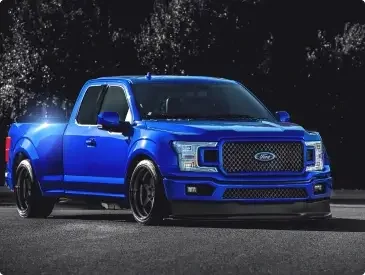
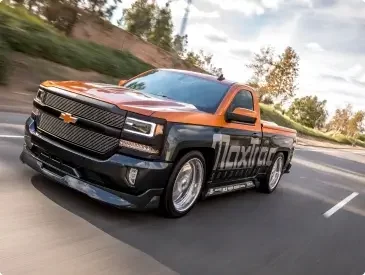
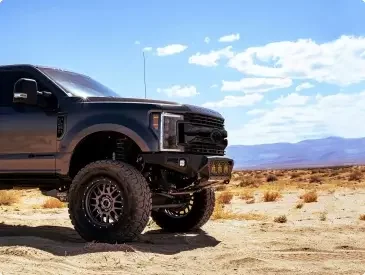
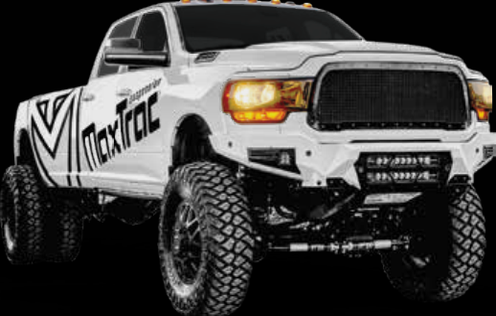
Deep-dish wheels have exploded in popularity in recent years. Sizes like 24″ x 12″, 26″ x 14″, and even 30″ x 16″ are now common in today’s truck market. They are large, aggressive, and undeniably eyecatching. However, what often gets overlooked are the downsides. Deep-dish wheels can wreak havoc on suspension components, alter suspension geometry, and create serious tire rubbing issues.
Originally, deep-dish wheels were most seen on 2500 and 3500 trucks. These heavyduty platforms were designed with stronger suspension components to handle increased loads. Today, this same wheel style has become popular on 1500, or halfton, trucks, which use lighterduty suspension systems and weaker factory components.
The problem comes from a combination of increased rolling mass and amplified leverage. The sheer size and weight of deep-dish wheels, combined with how far they extend outward from the wheel mounting surface, place excessive stress on independent front suspension systems.
Read more: Independent Suspension vs. Solid Axle Suspension System
This added leverage accelerates wear on critical components such as ball joints, tie rods, and wheel bearings, and in some cases can lead to sudden and complete component failure. These parts were never engineered to handle the increased stress loads created by deep-dish wheel setups.
At the root of the issue is wheel width. Factory wheels are typically 6 to 7 inches wide. Deep-dish wheels can be twice that width, or more. To fit within the suspension, most of this added width is pushed outward, causing the wheels to stick out an additional 6 to 7 inches compared to stock. This significantly increases leverage on wheel bearings and suspension components that were never designed for it.
WHEEL OFFSET VS. BACKSPACING
This added leverage is directly related to wheel offset and backspacing. While often used interchangeably, they are measured differently.
Backspacing is the distance from the inner edge of the wheel to the wheel’s mounting surface. Most factory wheels typically have around 6 inches of backspacing. On a factory wheel that is 7 to 8 inches wide, this results in a front wheel lip of roughly 2 inches.
On a deep-dish wheel that is 12 inches wide, the front lip can measure approximately 6 inches. This causes the wheel to sit far outward, placing the tire well in front of the mounting surface.
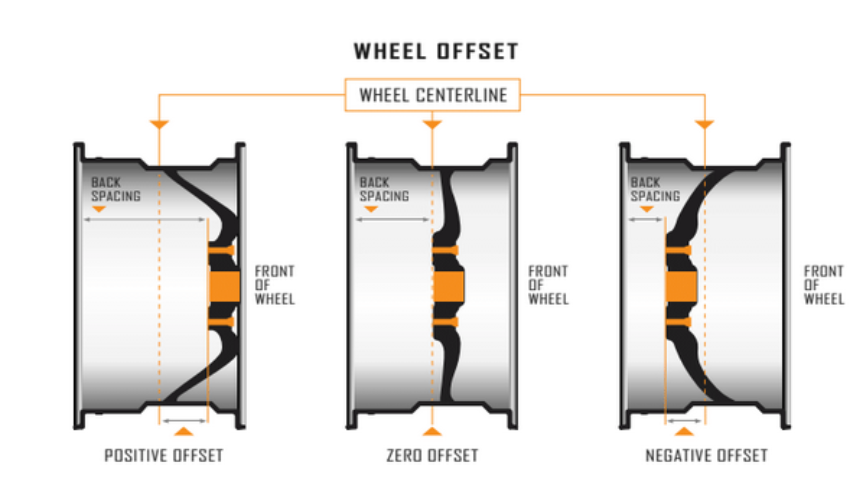
Offset measures the relationship between the wheel’s mounting surface and the centerline of the wheel. Offset is expressed as a positive or negative number. A negative offset means the mounting surface is closer to the inner edge of the wheel, causing the wheel to stick outward. A positive offset means the mounting surface is closer to the outer edge of the wheel, tucking the wheel further inward. The larger the negative offset, the further the wheel protrudes from the truck.
EFFECTS ON SUSPENSION GEOMETRY
Another major downside of deep-dish wheels is how they change suspension geometry. Because the wheels sit farther outward, more leverage is applied to suspension components. This can cause lift springs to produce less effective lift and settle beyond normal parameters.
Deep-dish wheels also prevent energy from cycling properly through the suspension. This added strain can lead to premature failure of wheel bearings, steering knuckles, control arms, and other critical components. A simple analogy is holding a bag of groceries with your arm fully extended. The further the weight is from your body, the more strain it places on your arm. Holding the same bag close to your body reduces leverage and allows you to carry it longer with less effort. Suspension systems work the same way.
Read More: Control Arms: How to Choose the Right Suspension
SCRUB RADIUS AND TURNING ISSUES
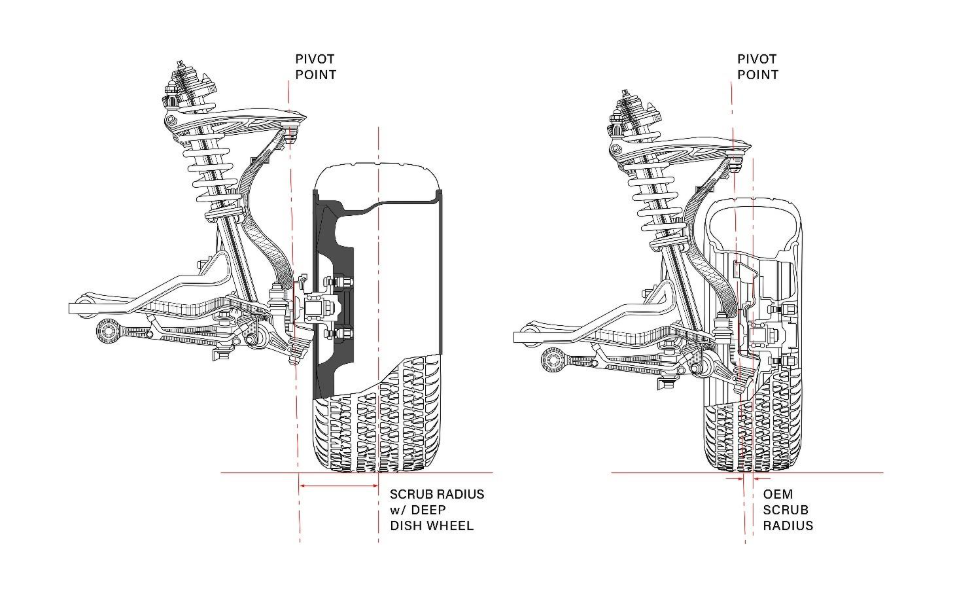
Another commonly overlooked issue is the effect deep-dish wheels have on scrub radius and turning geometry. The further a wheel sits from its pivot point at the ball joints, the larger the arc it travels during steering. This increases the likelihood of tire interference and rubbing.
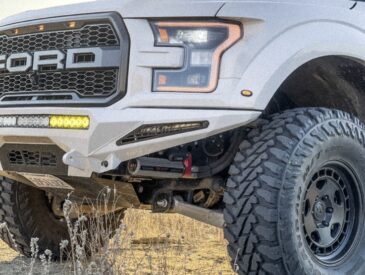
A stock wheel and tire combination pivots close to the ball joints, allowing the tire to cycle cleanly inside the wheel well. A deep-dish wheel that sticks out an additional 6 to 7 inches now pivots on a much larger radius. As a result, the tire is more likely to contact the bumper, inner fender, or firewall during turns.
To reduce tire rubbing and maintain acceptable turning radius, smaller than recommended tire sizes are often required. In many cases, aggressive and invasive trimming of the bumper, inner fenders, and wheel wells becomes necessary.
FINAL THOUGHTS
Deep-dish wheels may deliver the look many truck owners want, but they come with real tradeoffs. Increased wear, altered suspension geometry, reduced turning radius, and higher risk of component failure should all be considered before committing to this wheel style.
If you choose to run deep-dish wheels, routine inspection and maintenance are critical. Catching worn suspension components early can help prevent costly repairs and unexpected failures down the road.